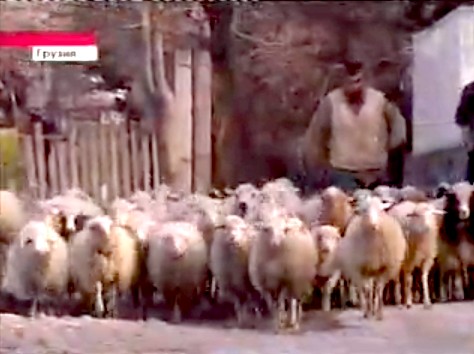
|

|
НОВОСТИ —
Воскресенье, 15.03.2009
|
NEWS — Sunday,
March 15, 2009 (5 min. Russian news video, text)
Video also posted on
YouTube.com from Vremia TV news.
Гузия:
Последние из молокан. (5 min. Russian news video)
Georgia: Last of the
Molokans.
|
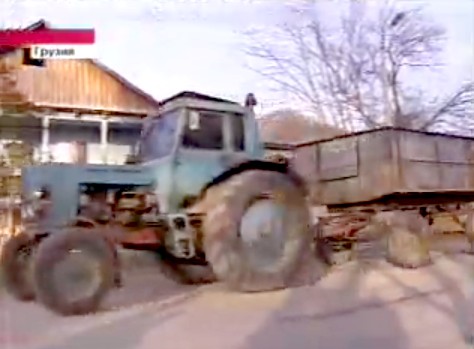
Немногочисленные колонии русских на Кавказе переживают
трудные времена
|
The few colonies of Russians in the Caucasus are
experiencing difficult times
|
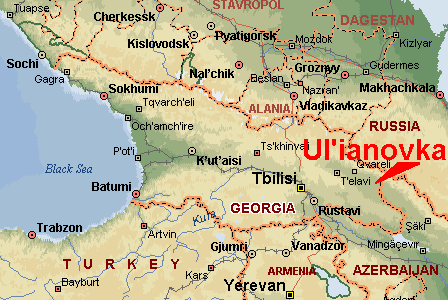
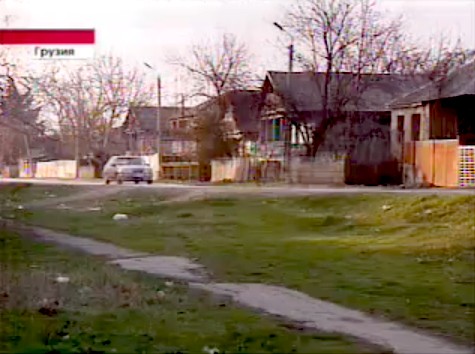
Ul'ianovka, Republic of Georgia
|
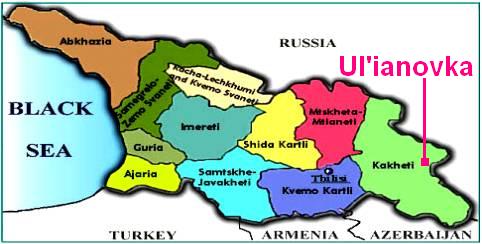
Ul'ianovka, Kakheti region of Georgia
|
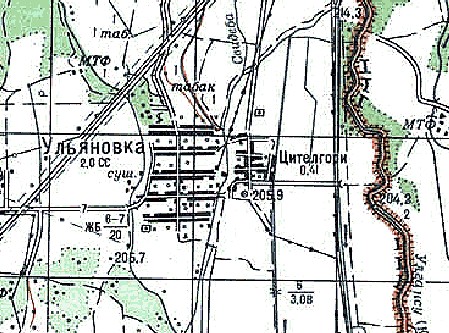
Ul'ianovka,
formerly Novo-Aleksandrovkoe |
|
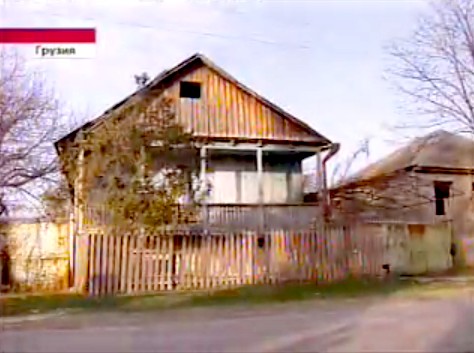
Поселения молокан в Грузии приходят в упадок, и их жители
подумывают о возвращении в Россию из Кахетии, куда в
середине XIX века они переехали по декрету императора
Николая I. 150 лет спустя, не ощущая никаких перспектив, многие из них готовы
покинуть Грузию. |
Russian text
(left) occasionally differs from the TV news video audio:
The Molokan villages in Georgia
are deteriorating, and their residents are considering
returning to Russia from the Kakheti region,
where they moved in the mid-1800s by an order of Emperor
Nicholas
I. 150 years later, not feeling any prospects, many of them are ready
to leave Georgia. [As many as 15 congregations of Molokane were
in Georgia. Also see news about Doukhobors
leaving
Georgia.]
|
 |
 |
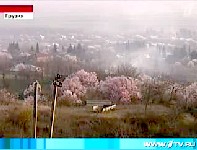
Ul'ianovka, Republic
of Georgia
|
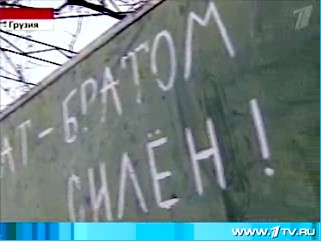
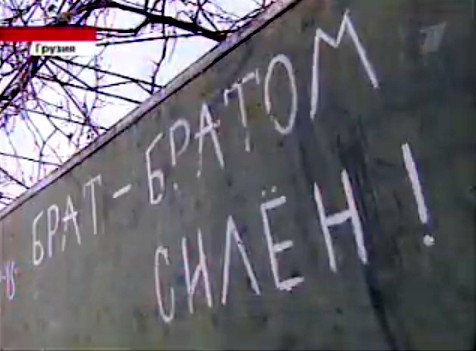
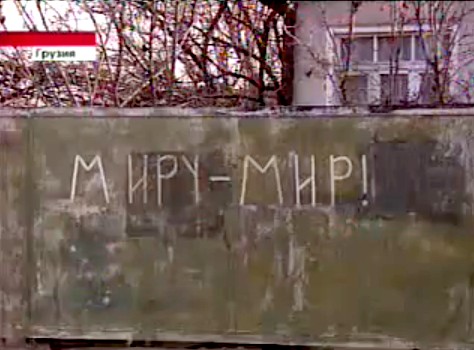
"Strength in
Brotherhood!"
|
|
Репортаж Евгения Баранова.
|
[In video]. The Molokan village was
visited by:
Evgenia [Eugene] Baranov reports. |
| Сегодня трудно найти
на
карте место, где можно прочитать на заборе надписи
такого содержания: "Брат братом силен", "Миру мир". Это не
остатки советской агитации, это заповеди, с которыми полтора
века назад в этих местах появились первые русские
переселенцы. |
(Molokan women
singing...) It is difficult to find
a
place on the map where you can read such writing on a
fence: "Strength in Brotherhood!" and "World Peace". This is
not the remains of a Soviet campaign [propaganda], but the
everyday sayings of the first Russian immigrants who moved
here 150 years ago. |
| Секта молокан, христиан, не
признающих церковь, не почитающих крест и не знавших причастия,
была основана в конце XVIII века. Их крестьянские общины
подвергались гонениям до тех пор, пока по указу Николая I
они не были выселены на окраины тогдашней империи в
Закавказье. |
The Molokan sect is
Christian, but they do not recognize the [Russian
Orthodox] church, the cross or communion
[Orthodox
Eucharist] They were founded in the late 1700s. Their
peasant congregations were persecuted until a decree by
[Tsar] Nicholas I, when they were moved to the Caucasus, at
the boundary of the former Empire. |
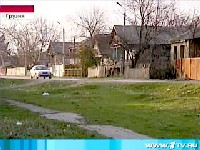 |

Less than 100 Molokans remain
|
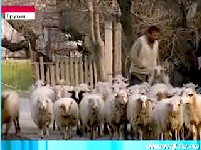
|
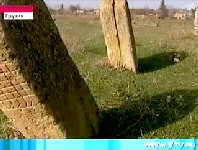
Cemetery
|
|
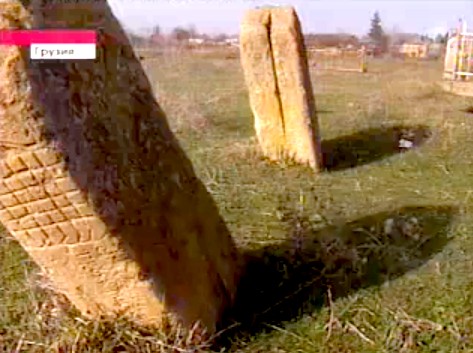
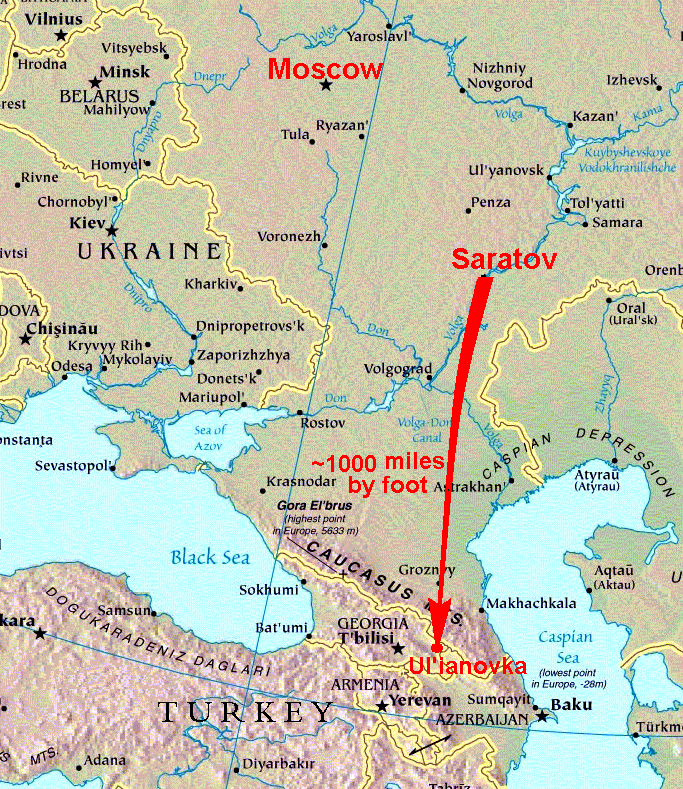
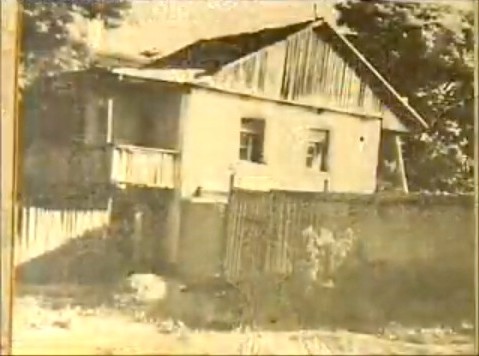
На
старинном молоканском кладбище под каменными
надгробиями без крестов покоятся те, кто в 1859 году
пешком добрался до Грузии из Саратовской губернии.
Здесь они основали русское село и назвали его
Новоалександровкой в честь царя-Освободителя
Александра II. Однако молокане всегда лояльны любой
власти, и в двадцатых годах прошлого века село было
переименовано в Ульяновку.
|
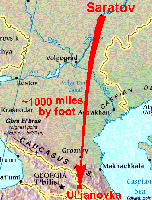
~1000 miles by foot
from Saratov to Georgia
|
In the old
Molokan cemetery, resting under boulder
grave markers without crosses are those who, in
1859, walked by foot [~1000 miles] from Saratov
province to Georgia. Here they founded the Russian
village of Novo-Aleksandrovka, named in honor of the
Tsar and Liberator Alexander II. However Molokans
are always loyal to any government, and in the 1920s
the village was renamed Ul'ianovka.
[Ul'ianov
is Lenin's actual last name.]
|
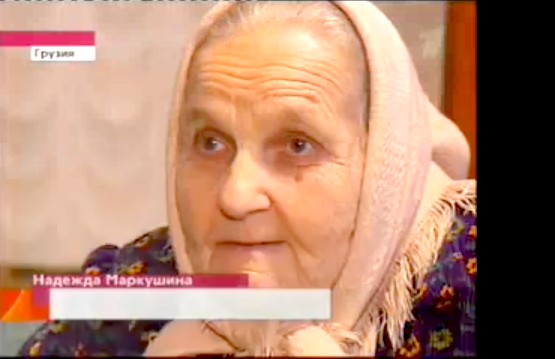
| Надежда Маркушина:
"При коммунизме жили, и не заметили. Но вот свободы
захотели, и дал Господь свободы". |
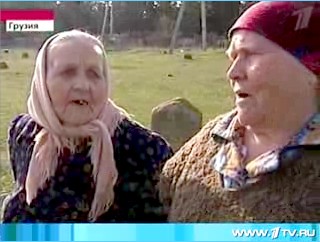
[In video.] Nadezhda
Markushina: "My friends. We lived during communism
but did not notice it. Right? Freedom was wanted,
and here God gave us freedom. There's freedom on the
table and freedom everywhere." |
|
 |
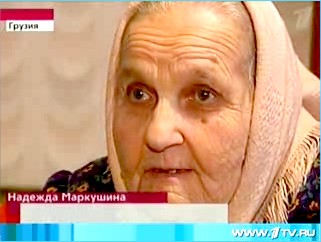
Nadezhda
Vas. Markushina |
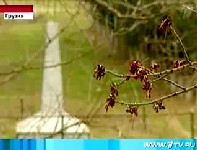
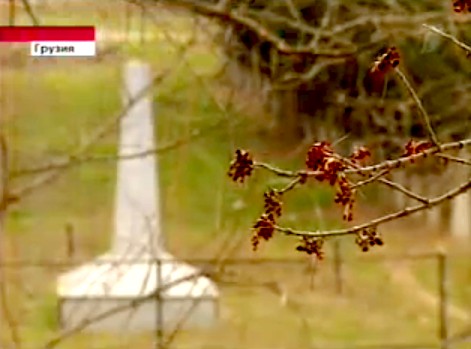
Veteran's memorial
|
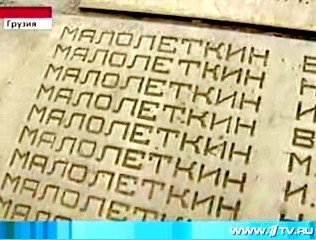
100 of 300 soldiers
died in WWII
|
|
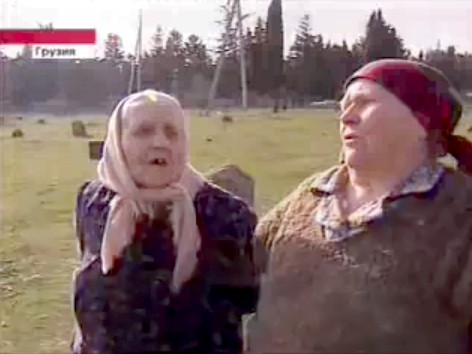
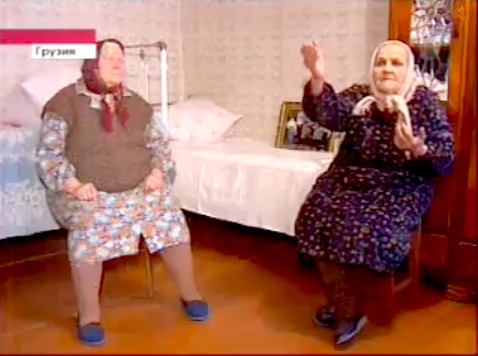
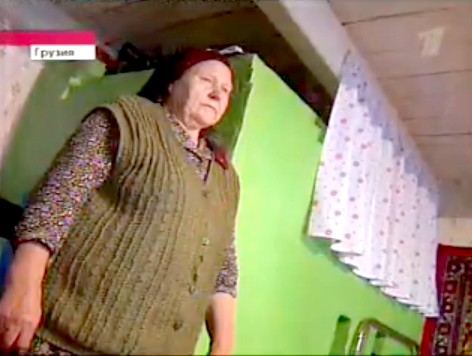
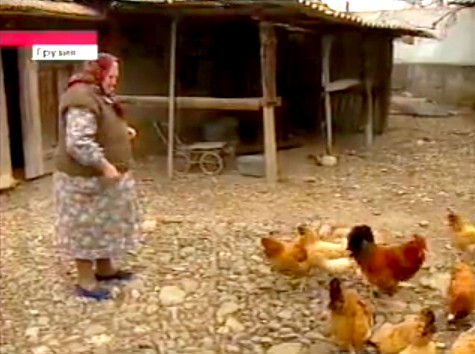
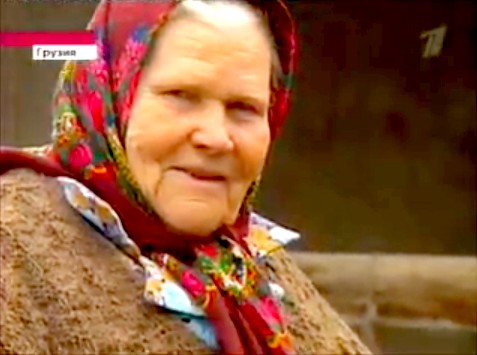
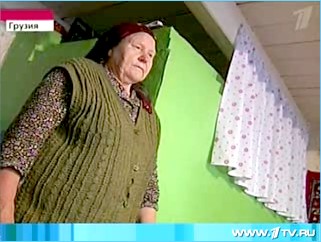
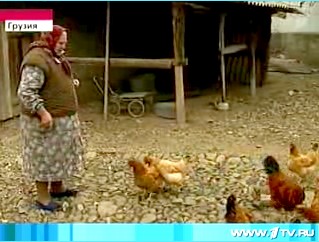
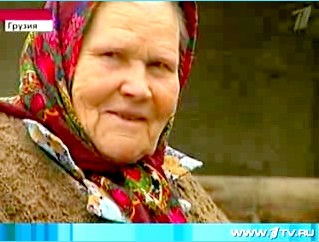
Надежде Васильевне Маркушиной
— под 80. Она одна из двух старейшин нынешней сильно
поредевшей молоканской общины. Лучший свидетель того, какой
была эта история — монумент павшим, который возвышается
напротив ее дома в центре села.
|
Nadezhda Vasilievna
Markushina is almost 80 years old. She is an elder member of
one of the two remaining depleted Molokan
congregations. [More
are in Tiblisi.] She is the best witness of their
history, because she can see a monument which stands in
front of her house in the center of the village. |
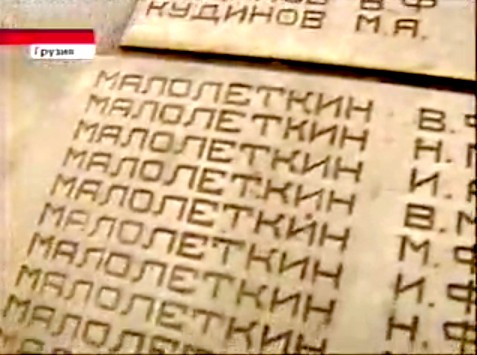
| Война выкорчевала из
Ульяновки целые фамилии. Из 300 молоканских мужчин, ушедших
на фронт, не вернулся каждый третий. Но даже такие потери
некогда крепкое и богатое село смогло пережить. Роковыми для
Ульяновки стали не сороковые, а девяностые года. |
The [second world] war took
from each family in Ul'ianovka. Of the 300 Molokan men who
went to the front, one in three did not return. But even
after these huge losses the village was able to survive. But
the difficult times for Ul'ianovka was not in the 1940s, it
came in the 1990s. (Singing.)
|
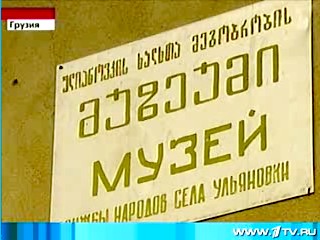
First Molokan
museum in world
|
 |
 |
2,500 Molokane
were here |
|
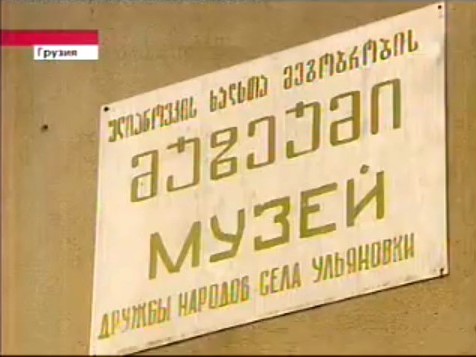
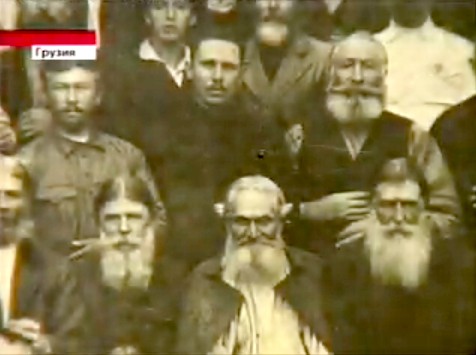
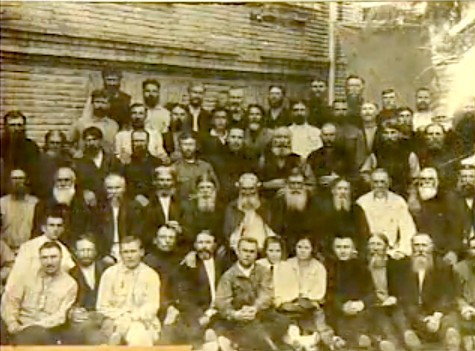
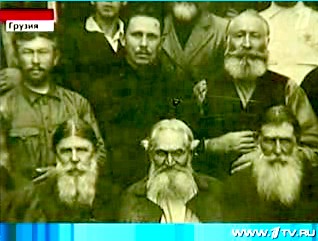
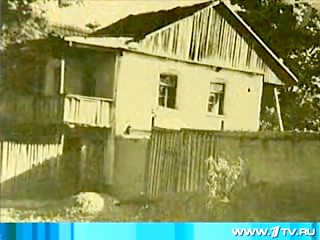
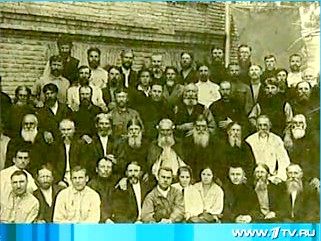
| В сельском музее с названием,
которого больше нигде не сыскать, на облупившихся стенах все
еще развешаны фотографии отцов-основателей села. Вряд ли эти
достойные мужи могли представить себе, что пройдет 100 лет,
и в их Ульяновке молокан останется втрое меньше, чем в тот
момент, когда они впервые увидели эту землю. |
(Women singing...) In the
village museum with the same name [Museum of People's
Friendship, Town of Ul'ianovka], on paint-chipped walls, can
be found photos of the founding fathers of the village. It
is unlikely that these worthy men could have ever imagined
that in 100 years there would be fewer Molokane in
their Ul'ianovka than when they arrived [first saw this
land].
|
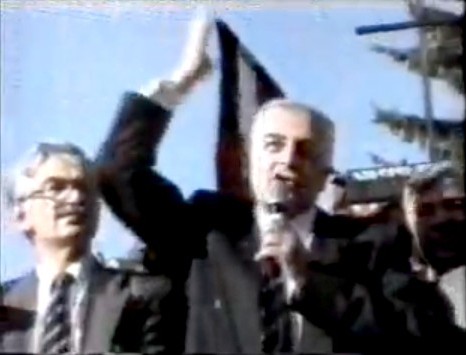
| Что лозунг "Грузия — для
грузин", брошенный первым президентом независимой Грузии
Звиадом Гамсахурдия в уже далеком 1992 году, приведет к
тому, что молокане побегут снова, только на этот раз в
обратную сторону. |
The slogan "Georgia is for
Georgians" shouted back in 1992 by Zviad
Gamsakhurdia, the first president of independent
Georgia, caused the Molokane to flee again, only
this time in the opposite direction. |
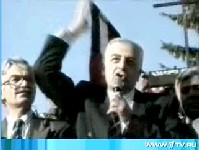
"Georgia is for Georgians!"
|
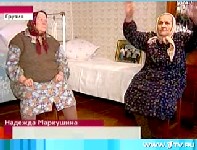
"It was terrible when
they left"
|
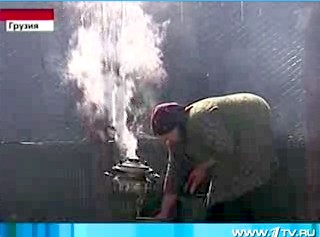
Heating the
samovar
|
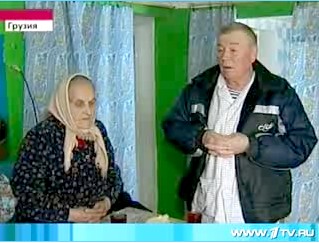
Shitukhin prays
|
|
|
[In video.] Nadezhda Markushina: "It was
terrible. The people leaving were sitting in their cars
crying, and we were here saying good-bye to them. It was
night-time, but very moon-lit. You could even read a
newspaper that night. The dogs were howling. It was really
frightening, you know, to leave your homeland."
|
| Надежда Маркушина: "В хорошие
годы в Ульяновке жило до двух с половиной тысяч молокан.
Сейчас — не больше сотни. В основном старики, которые тогда,
когда уезжали их дети, были моложе и рассчитывали на свои
силы". |
Nadezhda Markushina: "In the
good years up to 2,500 Molokane lived in Ul'ianovka.
Now, no more than a hundred remain, mainly elderly. When
their children left, the parents stayed behind. They were
younger and stronger then and thought they could take care
of themselves." |
|
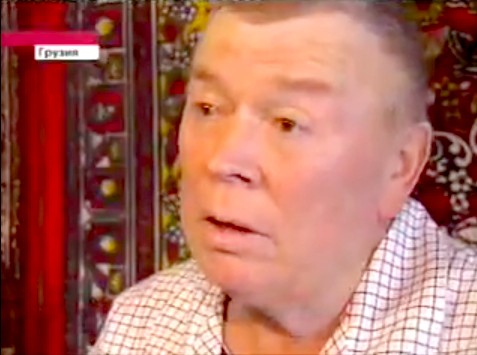
[In video.] Presbyter Matvei Ivanovich
Shitukhin prays: "God bless us to eat and drink in your
glory. Forgive all of us, especially me. And we ask you
and pray to you God, and we bow in the name of the
Father, the Son, and the Holy Spirit. All eat and drink. Sit
down." |
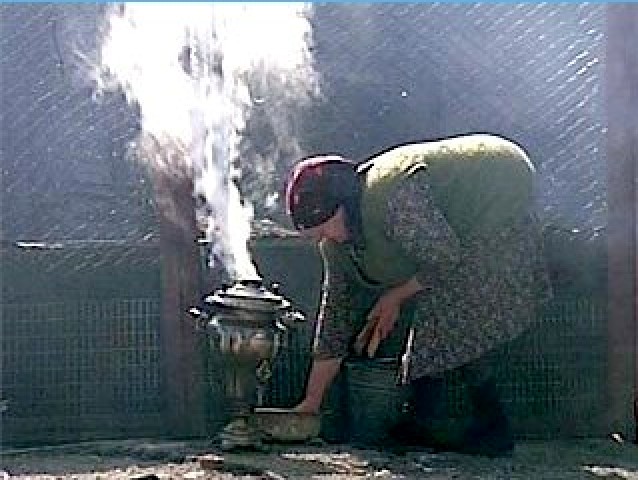
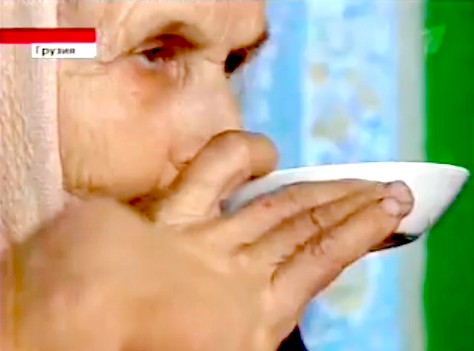
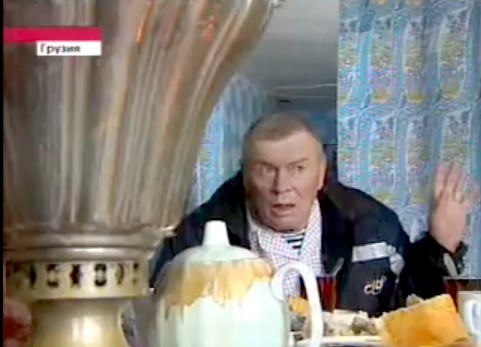
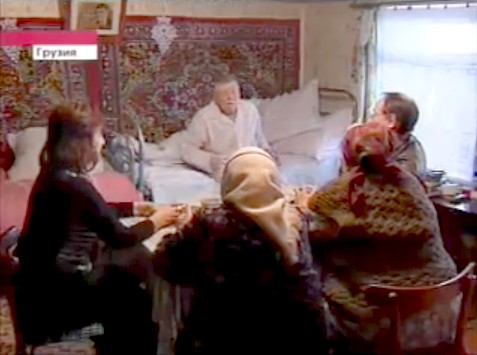
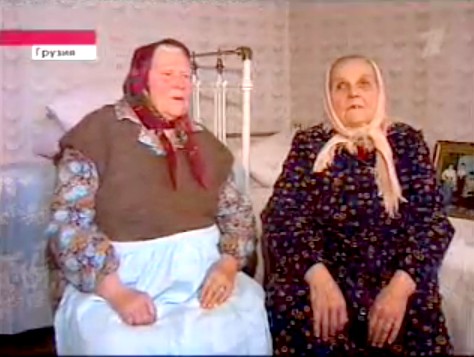
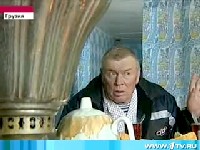
| Живущие в традиции, общинным
укладом, старики-молокане все эти годы как могли
поддерживали друг друга. Например, пресвитер у молокан, не
признающих священников, главный по духовной части. Матвей
Иванович Шитухин сильно болеет, но нет-нет, а соберет совет
своих старейшин у самовара. |
Living by tradition and with
a social-structure is how these elder Molokane could
support each other all these years. For example, by Molokan
dogma they have a presbyter [presiding elder] as a spiritual
teacher, not a priest or church hierarchy. Though Matvei
Ivanovich Shitukhin is very sick, he occasionally gathers
his council of elders around the samovar. |
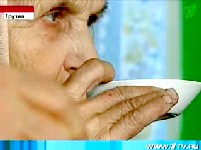
Drinking tea (chai)
|
|
|
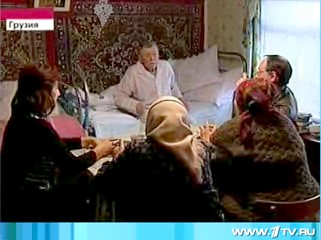
Journalists
interview presbyter
|
|
| Сегодня на повестке дня —
вопрос о том, что по селу среди грузин пошли слухи, что
кто-то из молокан нажаловался в Москву, что русских здесь
притесняют. |
Today's issue is what do
about the rumor that someone from the Molokane
complained to Moscow that they are persecuted by Georgians.
|
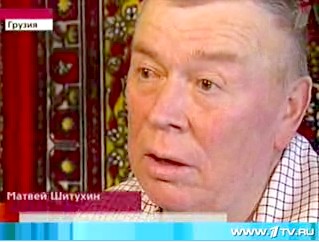
Presbyter Matvei Ivan. Shitukhin
|
|
|
|
|
|
[In video.] Shitukhin went to the village
authorities, who responded: "This and that. And because the
Molokane complained, their village will be
eliminated."
Do not worry because we don't think Molokane
complained, we think it was someone else. Because without
Georgian support, there would be no Molokans in U'ianovka by
now." The Georgians said they wanted to change the name of
Ul'ianoivka three times. But the Georgians said we are good
neighbors so they did not change the name of the village.
|
| Зловредный слух о молоканском
исходе, так взволновавший ульяновскую общественность,
при всей своей неправдоподобности, тем не менее, задел
молокан за живое. Когда в 1992 году они принимали решение
оставаться, никто из них и представить себе не мог, что
доживет до того, что Грузия будет воевать с Россией; что
посольство, где они получали российскую визу, будет закрыто,
равно как и граница, через которую они ездили к своим. |
The malicious rumor about Molokans
leaving Ul'ianovka stirred up a controversy. When the
Molokane decided to stay in 1992, none of them could
have imagined that Georgia would be at war with Russia, that
the embassy where they could get a Russian visa would be
closed, or the border closed through which they went to
Russia. |
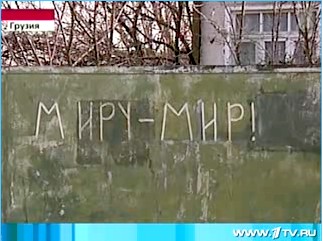
"World Peace!"
|
|
|
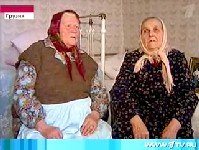
"No, you
sing!"
|
|
| Здесь все понимают, что песня
молоканской Ульяновки в скором времени будет спета, и
вероятнее всего, спета будет именно ими. |
Here, everyone understands
that the Molokan song of Ul'ianovka soon will be
sung, and will be sung by these people. [Russian idiom: You
are done, finished.]
|
|
[In video.]
— You start to sing.
— No, you start because you can sing the elongated notes [protiazhnie].
— No, you sing!
— Okay.
(Women singing ... )
——————————————
Eugene Baranov, Igor Kritskov
Sunday Vremia [TV news broadcast, March 15, 2009]
Ul'ianovka, Georgia
|
There are more Molokane in Tbilisi, but
the Russian news team choose to report about Ul'ianovka, perhaps because it is is
remote and only 6 miles (10 km) from the Azerbaidjan
border, a short 15 mile (24 km) drive from the nearest
border crossing. The Russian journalists would have been
harassed by Georgians if they tried to find Molokane
in Tbilisi, where several congregations remain.
|
This video also posted on YouTube.com from Vremia
TV news.
Гузия:
Последние из молокан. (5 min. Russian news video)
Georgia: Last of the
Molokans.
[Molokane in Russia are getting irritated that
several recent news stories are titled: "Last
of the Molokane."]
See
slide show of 5 images from video.
|
|
|
|
Spiritual
Christians in Georgia
Spiritual Christians
Around the World |